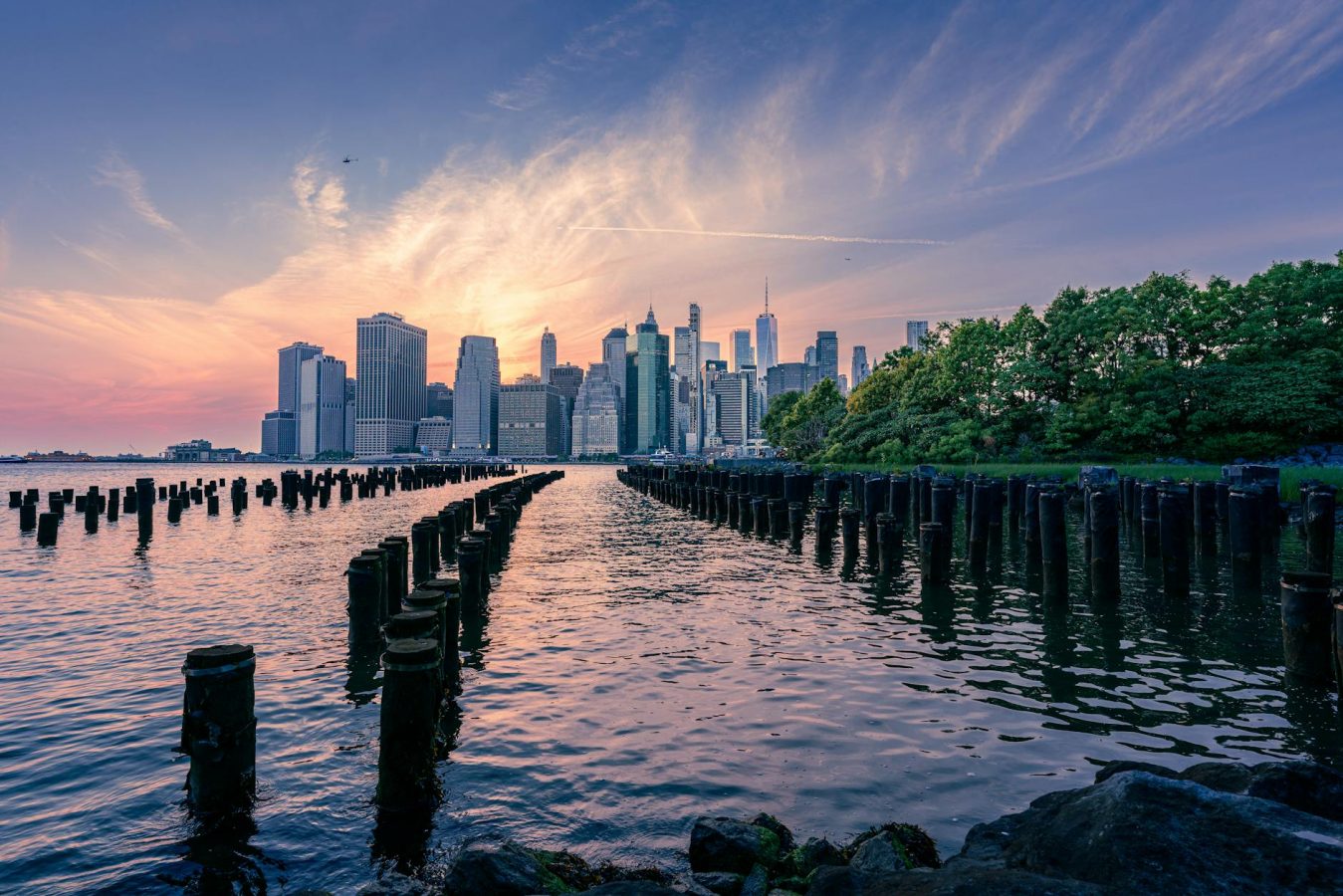
The secret’s out – everyone flocks to DUMBO or the Brooklyn Bridge Park for that iconic Manhattan skyline golden hour shot. And don't get me wrong, those spots are classics for a reason. But if you're like me, constantly chasing that fresh perspective, that untouched glow that makes a portfolio pop, then it’s time to turn your lens just a little further north. I’m talking about Williamsburg, my friends. Not the bustling Bedford Avenue, but the quiet, often overlooked stretches of its waterfront. This isn't just about avoiding crowds; it's about discovering a canvas of light and reflection that genuinely feels new, even in a city as photographed as ours.
Why Williamsburg for Golden Hour is a Fresh Perspective
Let's be honest, as NYC photographers, we're always looking for that edge. We want shots that stand out, that tell a story beyond the postcard. And while the allure of the Manhattan skyline during golden hour is undeniable, the sheer volume of photographers vying for the same angle can be exhausting. Williamsburg offers an escape from that fray, providing equally stunning, if not more dynamic, vistas.
What makes Williamsburg truly unique for golden hour isn't just the diminished crowds, but the quality of the light. The angle of the sun as it dips below the Manhattan skyline hits the Williamsburg waterfront in a way that creates incredible, elongated shadows and a warm, diffused glow that bounces off the East River. You get the iconic backdrop, but with a distinctly different foreground and mood. It’s less about the grand, sweeping panorama and more about intimate reflections, architectural details, and the vibrant interplay of urban life against a naturally stunning backdrop.
Beyond the Usual Suspects
When I tell clients and aspiring models to meet me in Williamsburg for a golden hour shoot, I often get a puzzled look. They expect the bridge, maybe a cobblestone street in DUMBO. But I’m leading them to places like Domino Park, yes, but also the less-trodden paths connecting the park to Bushwick Inlet Park, or even further north towards Transmitter Park. These areas offer a completely different feel. You’re trading the grand, historic architecture for industrial chic, modern design, and an incredible sense of space that’s surprisingly hard to find in such a dense city. It allows for a greater variety of shots, from wide urban landscapes to compelling portraits framed by unique textures and light.
Specific, Less-Trafficked Spots Along the Waterfront
Forget the main drag. We’re going off-piste, just a little. These spots are where I've captured some of my most compelling golden hour shots, giving my models that distinct, editorial edge.
The Northern Edge of Domino Park
Everyone knows Domino Park, right? The iconic refinery structure, the misty fountain. But instead of focusing solely on the south end, venture north. As you walk past the main lawn and towards the northernmost pier, you'll find quieter nooks. The industrial architecture of the old Domino Sugar Factory takes on a completely different character as the sun dips. The rust and concrete turn into a canvas of oranges and purples. Look for the quieter benches, the less-used walkways. The reflections here, especially after a recent rain, are absolutely incredible. The low angle of the sun creates dramatic shadows from the railings and sculptures, adding depth to any portrait. This area also offers a slightly different angle on the Manhattan skyline, less direct, more layered, with buildings peeking out from behind the industrial elements.
Bushwick Inlet Park and Its Piers
This is a hidden gem, often overshadowed by its flashier neighbor. Bushwick Inlet Park, just north of Domino, offers expansive green spaces that feel like a breath of fresh air. The magic here happens on its small, unassuming piers that jut out into the East River. These are perfect for those intimate, reflective shots. The light here is uninterrupted, bathing everything in that warm, buttery glow. You can capture stunning silhouettes against the skyline, or use the golden light to perfectly highlight a model's features. The water often acts like a mirror, doubling the intensity of the golden hour hues. Plus, there are fewer people, meaning you can really take your time and experiment without feeling rushed or self-conscious. I love using the weathered wood of the piers as leading lines, drawing the eye towards the distant city.
Transmitter Park’s Grassy Knolls and Shoreline
Further north still, in Greenpoint, Transmitter Park offers another unique vantage point. What I love about Transmitter Park is its slightly wilder, more natural feel compared to the manicured lawns of Domino. The long grasses on the knolls catch the golden light beautifully, creating a soft, ethereal backdrop for portraits. As the sun sets, the light hitting the Manhattan skyline from this angle creates a dramatic, almost cinematic effect. The small beach area, though not for swimming, provides fantastic opportunities for capturing reflections on wet sand, or models interacting with the tranquil shoreline. It's a completely different vibe – more serene, more contemplative, perfect for evoking a sense of calm against the city's hustle. The old WNYC radio transmission tower itself also becomes an interesting silhouette against the vibrant sky.
Tips for Maximizing the Unique Light and Reflections
Golden hour is fleeting, especially in NYC where buildings can cut off the light quickly. You need to be prepared and strategic.
Embrace the Reflected Light
The East River is your best friend during golden hour in Williamsburg. It acts as a massive natural reflector, bouncing the warm light back onto your subjects and the surrounding environment. Pay close attention to the water's surface. On calm days, you'll get perfect, mirror-like reflections of the skyline and the sky itself. Use these reflections to frame your subjects, create symmetrical compositions, or add an extra layer of visual interest. Look for puddles too! After a quick rain, even small puddles can become incredible canvases for reflected light and color. I often position my models to catch the light bouncing directly off the water, creating a beautiful, soft fill light that's impossible to replicate with artificial strobes. This technique can really make skin tones glow.
Play with Silhouettes and Lens Flare
As the sun dips lower, don't shy away from shooting directly into the light. This is prime time for stunning silhouettes. Frame your models against the vibrant sky and the sparkling city lights. The shapes and lines become the story. And don't be afraid of a little controlled lens flare. Used intentionally, a beautiful sun star or a warm, hazy flare can add an artistic, dreamy quality to your images. Experiment with different apertures (f/11 to f/16 often produces nice sun stars) and angles to control the effect. For me, a subtle lens flare can add an organic feel, making the viewer feel like they are right there, experiencing the moment. Just make sure it enhances, rather than distracts from, your subject.
The "Blue Hour" Afterglow
Don't pack up your gear the moment the sun dips below the horizon! The period immediately following sunset, known as "blue hour," offers a completely different, equally magical light. The sky turns a deep, rich blue, and the city lights begin to twinkle with greater intensity. This is when the skyline truly comes alive, and the contrast between the cool blue sky and the warm city lights is absolutely captivating. It's perfect for more dramatic, moody portraits, or sweeping cityscapes that evoke a sense of twilight magic. The light is softer, more even, and incredibly flattering. I often plan shoots to extend into blue hour, capturing two distinct moods within one session. The ambient light at this time is still strong enough to avoid needing excessive artificial lighting, maintaining that natural urban feel.
Gear and Settings for Capturing That Perfect Glow
Having the right tools and knowing how to use them is crucial for nailing those golden hour shots.
Lens Choices for Versatility
For golden hour in Williamsburg, I typically carry two lenses: a versatile zoom and a fast prime. My go-to zoom is usually a 24-70mm f/2.8. It gives me the flexibility to capture wide landscapes of the waterfront and skyline, as well as tighter portraits without constantly changing lenses. The f/2.8 aperture is fast enough for low light and offers beautiful background blur. For more intimate portraits, or when I want that ultra-creamy bokeh, I’ll switch to a 50mm f/1.4 or an 85mm f/1.4 prime. These lenses excel in low light, allowing me to keep my ISO lower and capture tack-sharp subjects with beautifully blurred backgrounds, truly isolating the model in that magical light. The wider aperture also helps in capturing more of that soft, diffused light.
Essential Camera Settings
Shooting golden hour means dealing with rapidly changing light. I always start in Aperture Priority mode (Av or A) to control my depth of field, usually setting it around f/2.8 to f/5.6 for portraits, and f/8 to f/11 for landscapes. I let the camera choose the shutter speed, but I keep a close eye on it to ensure it’s fast enough to prevent motion blur (aim for at least 1/125th of a second for handheld portraits). My ISO is usually as low as possible, typically 100 or 200, to maintain image quality, but I won’t hesitate to bump it up to 800 or 1600 if needed as the light fades. White balance is crucial: I often set it manually to "Cloudy" or "Shade" to enhance the warm tones of golden hour, or I’ll shoot in RAW and adjust in post-production for maximum flexibility. Don't be afraid to underexpose slightly to preserve highlight detail in the sky – you can always bring up shadows in editing.
Accessories for the Dedicated Photographer
Beyond lenses, a few accessories are invaluable. A sturdy tripod is a must if you plan to shoot into blue hour or want to experiment with longer exposures for silky water. A polarizing filter can help reduce glare on the water and intensify sky colors, though be mindful of its effect on the warmth of the golden light. A small reflector (silver or gold) can be incredibly useful to bounce that beautiful golden light back onto your model’s face, especially if they are backlit. And of course, extra batteries and memory cards are non-negotiable – you don't want to miss that perfect moment because of dead gear. I also always carry a lens cloth; salty air near the river can leave residue.
Post-Processing for That Signature Glow
Capturing the image in-camera is only half the battle. Post-processing truly brings out the magic of golden hour.
Enhancing Warmth and Contrast
My goal in post-processing golden hour shots is always to enhance the natural warmth and contrast without making the image look artificial. I start by adjusting the white balance if I didn’t nail it in camera, subtly shifting it towards warmer tones. Then, I’ll often boost the "Highlights" and "Shadows" sliders to bring out detail in both the brightest parts of the sky and the darkest areas. A slight increase in "Clarity" and "Dehaze" can add punch to the cityscape, but use sparingly to avoid a harsh look. My favorite trick for that extra "pop" is to use local adjustments – a radial filter or gradient filter – to selectively enhance the glow in the sky or on the water, painting in warmth and exposure where the light naturally falls.
Color Grading and Atmospheric Effects
Beyond basic adjustments, I love to play with color grading to further enhance the mood. Split toning, where you add a warm tint to the highlights (e.g., oranges or yellows) and a cooler tint to the shadows (e.g., blues or purples), can create a beautiful, cinematic effect that mimics the natural color shifts of twilight. I also experiment with subtle atmospheric effects. A touch of "Grain" can add a filmic quality, and sometimes a very slight "Vignette" can draw the eye towards the center of the frame, enhancing the focus on the model. Remember, the key is subtlety. You’re enhancing what was already there, not creating something from scratch. The goal is to make the viewer feel the warmth and magic of that specific moment.
Conclusion: Unlock Williamsburg's Golden Potential
So, there you have it. Williamsburg, often overshadowed by its more famous neighbors, holds an incredible, untapped potential for golden hour photography. It’s a place where the light plays differently, where the cityscape gains a new character, and where you can find fresh perspectives even in a city as photographed as ours. From the industrial charm of Domino’s northern reaches to the serene piers of Bushwick Inlet Park and the natural beauty of Transmitter, there's a unique canvas waiting for your lens.
Stop fighting the crowds and start exploring. The next time you're planning a photoshoot, consider turning your focus to the East River waterfront in Williamsburg. The golden hour here isn't just a time; it’s an experience, a chance to create truly unforgettable images that stand out in any portfolio.
Ready to capture your own unforgettable golden hour moments with a professional team that knows every secret spot? Visit dantet9.com to book your bespoke photoshoot with Dante's Models today. Or, if you're looking to refine your own photography skills, check out our free photography tools designed to help you plan your next golden hour adventure!
Cover photo by Ramon Perucho on Pexels.