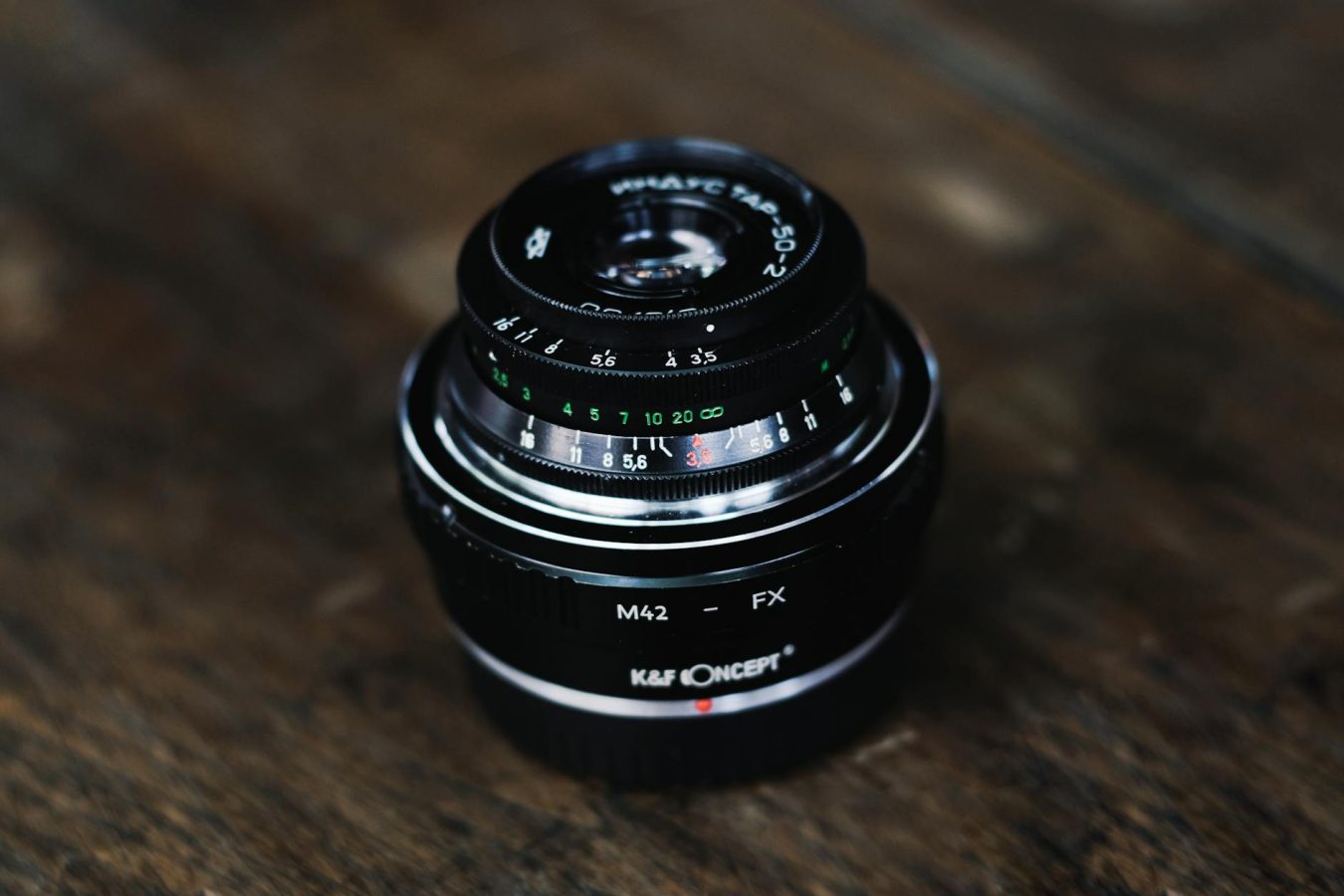
For years my camera bag was full of zooms. Wide for the Manhattan skyline, telephoto for candid moments across Grand Central. Then I noticed that my best New York shots came from a much simpler setup: one 50mm prime. It is a 50mm that a lot of photographers overlook, especially when they are starting out and the choices feel like too much.
Why I went with this 50mm
For a long time my work needed versatility, from high-fashion editorials in Dumbo warehouses to street performers in Washington Square Park. Then I wanted something that made me slow down and see differently. I was tired of zooming with my hands and wanted to zoom with my feet.
I started with the "nifty fifty," the f/1.8 plastic one. It was great for the price, but the build felt flimsy, the autofocus hunted and the bokeh was not as creamy as I wanted. I wanted something that could take the bumps of daily NYC life. I researched, read forums, talked to other photographers in the city and tried a few different 50mms. None clicked until the Sigma 50mm f/1.4 Art DG HSM. Yes, another f/1.4 50mm, but this one is different.
What drew me was its reputation for sharpness, even wide open. I work in unpredictable light, from midday sun bouncing off glass towers to dim speakeasy interiors in the West Village. A lens that performs at f/1.4 means I can keep the ISO lower, hold more detail and separate the subject from the background. It felt like an investment in my work, not only in glass.
Using it: sample shots
On its first outing I took one of our agency models, Chloe, to Brooklyn Bridge Park. The late afternoon light hit the Manhattan skyline just right. Wide open, her face was sharp down to the lashes and the skyline blurred behind her.
Then I started carrying it almost only for street walks, from the market stalls in Chinatown to the brownstone blocks of the Upper West Side. With a 50mm you can't stand back and zoom. You have to anticipate, move and get close, make eye contact and catch unposed moments a longer lens would miss. One morning I caught an elderly man reading the newspaper on a stoop in Greenwich Village, with window light on his face. His weathered hands and the lines around his eyes were clear in a single frame. The lens focuses quickly even in tough light, which matters when a moment is gone in a second. It is heavy, but the weight steadies it when I hand-hold at slower shutter speeds.
Wide open at f/1.4
Many lenses get soft, show chromatic aberration or vignette when shot wide open. This Sigma Art is sharp from edge to edge, even at its widest aperture. That means I can shoot the neon in Times Square at night or reflections in puddles after rain in SoHo without giving up image quality.
I used it for a test shoot with Maya, a new face from our agency, near the Flatiron Building. The ambient light was flat. Opening up to f/1.4 made her stand out from the architecture, and the background stayed recognizable but turned into a soft wash of color and light.
Beyond portraits
It is a portrait lens, but I have also used it for editorial street style during Fashion Week in Tribeca and for a chef plating a dish in a Michelin-starred restaurant on the Lower East Side.
For editorial work a 50mm makes you think about composition and the relationship between the subject and the setting. A client once wanted environmental portraits of artists in their Bushwick studios. Instead of a bag of lenses, I took just the 50mm. The images were intimate and honest, helped by the natural perspective and the low-light performance.
It is also good for details: the mosaic work in subway stations, a brick wall in the Meatpacking District, a produce stand at Union Square Market. The sharpness and micro-contrast hold the detail well. I have used it on architectural details of historic buildings in Midtown, where it shows no distortion.
Who this lens is for
It suits a photographer who wants optical quality and doesn't mind weight. Portrait photographers get sharp focus and smooth bokeh. Street photographers get a natural perspective and a reason to move in close. It also works for documentary work, events and some fine art, and for anyone shooting in varied light who needs a reliable lens.
It is not for everyone. If you put light gear first, the Sigma Art is hefty, and some photographers prefer a lighter setup for long days of walking. If you rely on zooms and don't want to zoom with your feet, a 50mm prime may feel restrictive. It is also not the cheapest 50mm. If budget comes first and you are just starting with primes, the affordable "nifty fifty" is the better start. If you need extreme wide-angle or telephoto, this lens won't replace those, but it goes well alongside them.
A prime simplifies your gear and makes you think harder. This is the 50mm that rarely leaves my camera body.
To book a shoot with us, go to dantet9.com. If you want to work on your own photography, we have free tools at dantet9.com/tools.
Cover photo by Nguyen Huy on Pexels.